Is Steam too dominant?
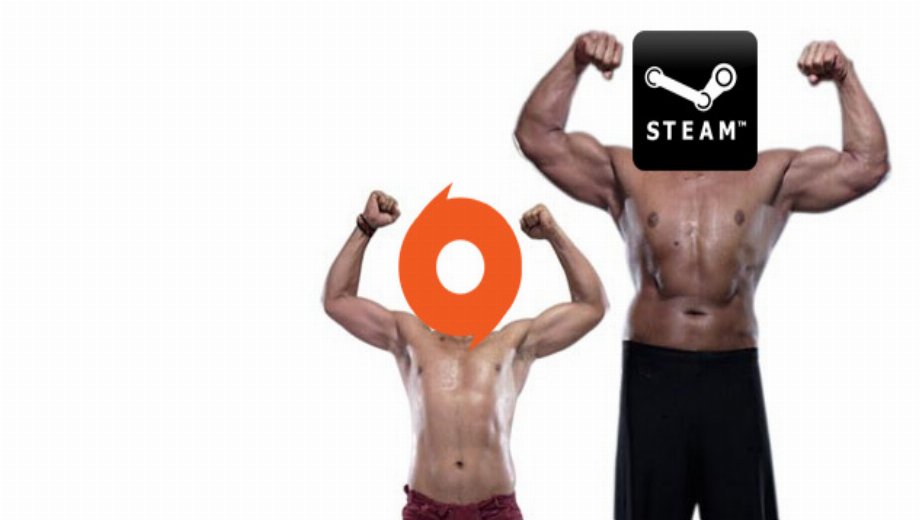
A monopoly is never good for an industry. That’s clear. It’s why Intel was fined for over a billion Euros in the early 2000s for its anti-competitive behaviours with regards to chip-giant rival AMD. It’s why the Nvidia AMD (ATI) rivalry has always been a good thing, as it pushes each to outdo the other and compete for our money, instead of coasting it.
Except, in the world of PC gaming that competition doesn’t exist. Sure developers need to go head to head with one another for sales, as there is only so many games we can buy and play. But when it comes to platforms, digital distribution channels, there really is only one.
Steam.
Now I’m a big fan of Steam. I haven’t bought a boxed game in well over half a decade thanks to that little Valve icon in my taskbar. It’s sucked up thousands of hours of my time and while that’s great for Valve and in many ways great for the hobby, because it’s done a lot of good things for PC gaming when others abandoned it (we’re looking at you Microsoft), I still don’t like that it’s in a one horse race.
There are other digital distribution platforms out there. Quite a few in-fact: GoG, Uplay, Origin, Humble, GreenManGaming and plenty of others, but they all pale in comparison to the sheer numbers that Steam has.
Steam regularly has five million people playing games at once and has an install base that’s around 50 million. Compare that with EA’s Origin, which is mandatory for its Battlefield games, some of the most popular in gaming history and it has just 10 milllion downloads and a peak user number of around a million.
Ubisoft’s service in comparison has around 300,000 concurrent users at its peak. Humble bundle sells a few hundred thousand bundles at a time, but that’s anywhere up to 10 games so isn’t necessarily comparable in the same sense.
We don’t have much in the way of real numbers for every service, but we’re certainly at a point that unless you are an Ubisoft or an EA, with the kind of money to build your own fanbase through sheer weight of marketing and franchises, you are going to need to be on Steam. We saw a problem with this recently where the indie developer behind Paranautical Activity had his game pulled from Steam for threatening Gabe Newell on Twitter. At which point, he quit game development, as without Steam he couldn’t make any money.
Whether you agree with the initial comment or the response from Valve, it remains that the man lost his career because Steam was his only option.
Similarly some of Ubisoft’s massive upcoming titles were pulled from the platform. While it’s not clear why it happened and the games are back now, for a while it seemed crazy. Ubisoft would lose millions without Steam to promote its games and for the ease with which people can download them.
The problems with Steam are larger than individual companies though. A couple of years ago Valve finally removed itself from the arbitration process and created Greenlight, a system where gamers could hype a product all the way to the Steam store. It allowed indie developers to get some much needed exposure and the potential for a big pay day if they could make it through.
But now the problem is that Greenlight isn’t really working. Games are making it through on hype alone, without content to speak of and developers are then cutting and running with everyone’s money. Then you have others that are releasing broken games unapologetically, or not fulfilling promises and moving on to the next money maker.
There’s also the issue that Greenlight is barely used by most Steam users, so while Valve iis no longer a small group of individuals choosing what games are available, now there’s a small group of gamers deciding instead, which is hardly better.
While none of this is inherently Valve’s fault, the fact that Steam is the only place where these developers can get that exposure means that any problems with it become larger scale issues for PC gaming as a whole.
But it’s not guiltless. While Steamworks and similar features are a nice tool for modders, it encourages developers to build their games with Steam in mind, which just adds to the vicious circle of monopolising.
So what’s the solution? Nobody would ever suggest that Valve try and make itself less of a useful or popular service. This is a free market economy after all. Instead, there are alternatives that should be championed, because if anything, they’re actually better than Steam and for legitimate reasons.
GoG and Humble Bundle both offer games without any form of DRM (which Steam in itself is, albeit a very non-intrusive one) the former especially has built itself on that main point. They also provides manuals and soundtracks and have had reviews for years, where Steam has only recently consented to adding that feature.
While it is convenient to have all your games in one place, I’d urge you to consider using others now and again, if for no other reason than to keep the scene competitive. Even if you don’t use Origin or Uplay, it’s important they exist, because we don’t want Valve to have the only say in PC gaming.
It’s a great company but no one person knows what’s right for the industry. PC gaming was built on the foundations of an open platform and we’re slowly but surely slipping towards a precipice where Steam is all we know and use.
Keep your mind open people. Keep playing games where you get the best service, not just in the place that you usually buy them.
Source de l'image : GoBollywood


![Garfield – Escape from Monday v1.0 (+7 Trainer) [RazorDOX]](https://618b31e8.delivery.rocketcdn.me/wp-content/uploads/2026/10/Garfield-Escape-from-Monday-01-464x276.jpg)

![Grounded 2 (+38 Trainer) [FLiNG] – Update September 2026](https://618b31e8.delivery.rocketcdn.me/wp-content/uploads/2025/08/Grounded-2-1-464x276.jpg)