Ubisoft-Umstrukturierung trifft hart: Red Storm verliert seine Rolle als Entwickler
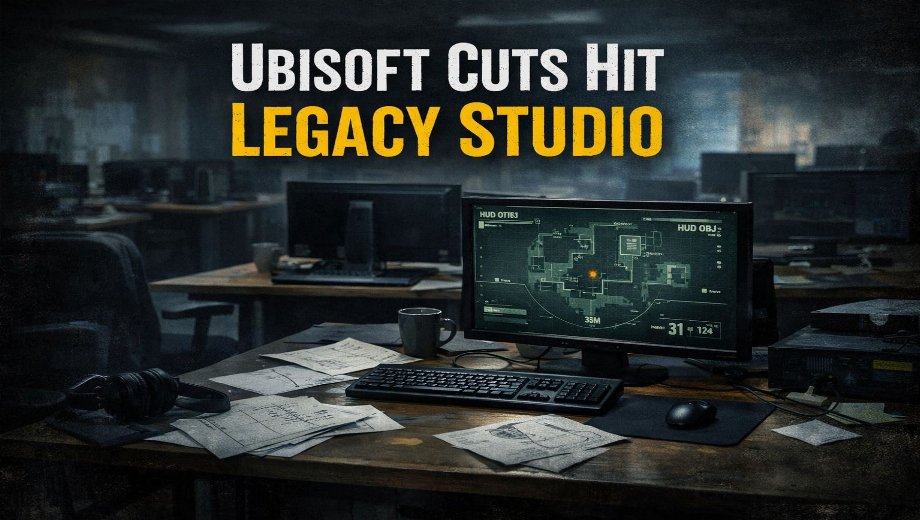
Ubisoft’s ongoing restructuring is claiming another major piece of its legacy. Red Storm Entertainment, long associated with tactical shooters, is losing its development department. Around 100 employees are affected as Ubisoft continues to streamline operations. The decision goes beyond cost-cutting. It signals a clear shift in how the publisher structures its studios and prioritizes production.
The most important points at a glance
- Red Storm Entertainment loses its development department
- Around 100 jobs affected across development roles
- Studio shifts toward support functions and technical work
- Part of Ubisoft’s broader restructuring strategy since 2025
- Studio contributed to Rainbow Six and Ghost Recon
A Studio With Deep Roots in Tactical Gaming
Red Storm Entertainment played a defining role in shaping modern tactical shooters. The studio was closely tied to early entries in the Regenbogen Sechs franchise and contributed to the evolution of Ghost Recon. Its design philosophy focused on precision, planning, and realism, setting it apart from faster-paced shooters.
In recent years, however, Red Storm’s position shifted. Instead of leading major releases, the studio increasingly supported other Ubisoft projects and experimented with smaller-scale developments. That gradual transition already suggested a reduced role within Ubisoft’s internal hierarchy.
Ubisoft’s Strategy Becomes Clear
This decision fits into a broader restructuring effort that has been ongoing since 2025. Ubisoft has been cutting costs, canceling projects, and consolidating development across fewer core teams. The goal is clear. Focus resources on key franchises while reducing production complexity.
The shift also reflects growing pressure after delayed releases and inconsistent performance across recent titles. Ubisoft is moving toward fewer, larger projects with longer lifecycles. Industry coverage, including analysis from PC-Spieler, highlights this transition toward centralized production and reduced risk.
Within that structure, studios like Red Storm are repositioned. Instead of leading projects, they contribute to shared technology and infrastructure, including work on the Snowdrop engine.
Job Losses and Industry Context
Roughly 100 employees are expected to be affected by the change. Developers, designers, and production staff are among those impacted. The move reflects a wider industry trend where studios are scaling back to control rising costs and increasing development complexity.
Ubisoft is not alone. Major publishers across the industry are reducing headcount and consolidating teams. The original report from PC-Spiele Hardware confirms that Red Storm will remain operational, but no longer as a primary development studio.
The End of a Legacy Role
For longtime players, this shift carries weight. Red Storm represented a specific approach to game design. Slower pacing, tactical depth, and a focus on realism defined its work for years.
With the end of its development role, Ubisoft is not just restructuring teams. It is moving further away from that design philosophy. The focus now lies on scalable production models, live-service frameworks, and globally coordinated development.
Was kommt als Nächstes?
Ubisoft’s direction is clear, but the long-term impact remains uncertain. Streamlining may improve efficiency, but it also risks losing creative identity. Red Storm’s transition reflects that tension.
For players, the question is simple. Will this shift lead to better games, or just safer ones? Either way, the loss of Red Storm’s development role feels less like a single decision and more like a sign of where the industry is heading.



![Hell Clock v1.0-v2.0+ (+18 Trainer) [FLiNG]](https://618b31e8.delivery.rocketcdn.me/wp-content/uploads/2025/08/Hell-Clock-1-464x276.jpg)

![Ace Combat 8: Wings of Theve v1.0+ (+20 Trainer) [FLiNG]](https://618b31e8.delivery.rocketcdn.me/wp-content/uploads/2026/10/ACE-COMBAT-8-WINGS-OF-THEVE-01-scaled-464x276.jpg)