Hôpital du projet
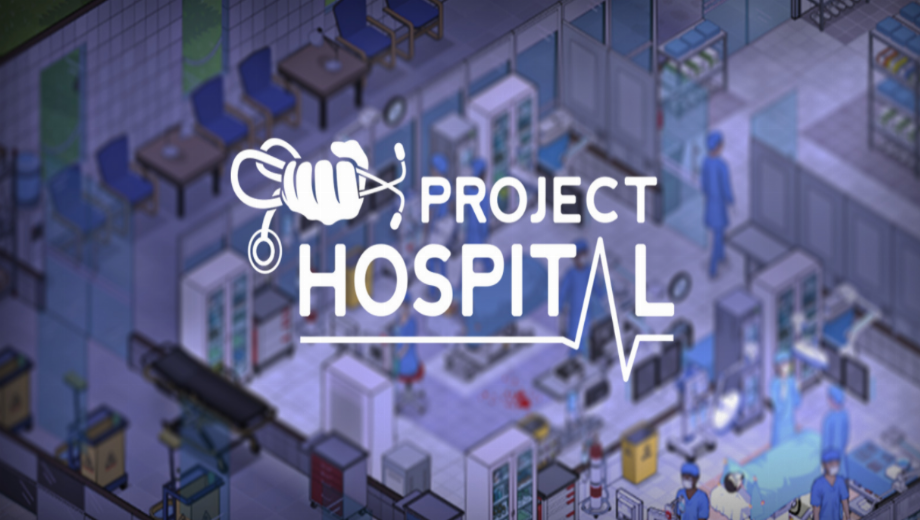
 Oxymoron Games developed and self-published Hôpital du projet. It launched on October 30, 2018 for PC via Steam on Windows, macOS, and Linux. Oxymoron Games is a Czech indie studio and Project Hospital is their flagship title, receiving continuous updates and DLC expansions since release. The game is built on Unity Engine and has earned a Very Positive rating across its full review history on Steam with an 88% positive score. Furthermore, its reputation as the most medically detailed hospital management sim on PC has sustained an active modding community that has more than doubled the base game’s department count through Steam Workshop.
À propos du jeu
Project Hospital makes you the architect, manager, and doctor of your own hospital simultaneously. You design the floor plan room by room, hire and train every staff member, manage the budget, and directly participate in diagnosing and treating individual patients using a simulation of real medical procedures. The game covers over 100 medical conditions based on real-world diseases and injuries. Every patient who walks through your emergency department goes through a structured diagnostic process: history, physical examination, lab tests, imaging, and treatment. Furthermore, no two diseases follow the same diagnostic path, which means understanding medical logic is a genuine advantage rather than optional flavour content. Consequently, Project Hospital rewards players who engage seriously with its medical depth far more generously than those who treat it as a pure construction game.
Hospital Architecture and Department Building
The construction layer gives you full control over your hospital’s layout. Rooms are placed freely on a grid: ward rooms, operating theatres, examination rooms, nurse stations, corridors, waiting areas, and support facilities all require deliberate spatial planning. Department efficiency depends on how close related rooms are to each other and how smoothly patient flow moves between them. Emergency patients triage fastest when the Emergency department sits on the ground floor with direct access to Radiology and Medical Laboratories. Furthermore, the layout directly affects staff walking time, patient wait times, and critical care outcomes. As a result, hospital design is a genuine strategic challenge that produces measurably different operational results rather than a cosmetic exercise in making the building look good.
Patient Diagnosis and Medical Depth
The diagnostic system is the feature that separates Project Hospital from every other hospital management game. Each patient presents with symptoms. You order examinations, request lab panels, and prescribe imaging to narrow down the diagnosis. Each test costs money and time, and ordering the right tests in the right sequence determines how quickly the patient is treated and whether they survive. Some conditions share overlapping symptoms and require ruling out competing diagnoses before the correct treatment can begin. Furthermore, the direct control option lets you step into the doctor role personally and make diagnostic decisions patient by patient rather than delegating entirely to your AI staff. Consequently, the medical layer functions as a separate strategy puzzle embedded within the management game rather than automated background noise.
Caractéristiques principales
Departments and Staff Management
- Nine Base Game Departments Covering Emergency Through to Intensive Care: The base game includes Emergency, Radiology, Medical Laboratories, Intensive Care Unit, General Surgery, Internal Medicine, Neurology, Orthopedics, and Cardiology. Each department requires specific room types, dedicated medical equipment, and trained staff with the correct specialisations. Radiology and Medical Laboratories operate as support departments serving every other department’s diagnostic needs rather than treating patients directly. Furthermore, the ICU receives the most critically ill patients from across the hospital and demands the highest staff skill levels to keep patients alive through the most complex cases. As a result, every department decision has a knock-on effect on the performance of every other department in the hospital.
- Staff Hiring, Training, and Skill Progression: Every employee in Project Hospital has individual skill levels that improve with experience and deliberate training. Doctors carry skill ratings in diagnosis accuracy, surgery, and department-specific knowledge. Nurses have proficiency in patient care and procedure speed. Hiring more experienced staff costs more in salary while training junior staff costs time before they deliver value. Furthermore, staff have personal needs including hunger, fatigue, and job satisfaction that degrade performance if management ignores them. As a result, the HR layer of Project Hospital carries genuine operational weight rather than functioning as a passive background counter.
Financial and Operational Management
- Budget, Insurance, and Contract Management with Real Financial Pressure: The financial model in Project Hospital runs through insurance contracts and patient billing rather than simple income bars. Different insurance providers cover different procedures at different rates. Signing contracts with higher-paying insurers requires meeting their case volume and quality requirements first. Budget management involves balancing capital expenditure on equipment and rooms against operating costs covering staff salaries, supplies, and loan repayments. Furthermore, poorly managed departments generate losses through staff inefficiency and test overuse, meaning financial awareness and medical awareness are inseparable skills in the same game. As a result, profitable hospital operation is a consequence of good medical management rather than a separate financial minigame running in parallel.
- Scenario Mode and Freeplay with Multiple Difficulty Options: Project Hospital offers both pre-built scenarios with specific starting conditions and objectives alongside a freeplay sandbox where you design the hospital entirely from scratch. Scenarios provide structural challenges for players who want directed goals at different difficulty levels. Freeplay allows unrestricted hospital design for players who want complete creative control from the first room placed. Furthermore, difficulty settings affect the financial pressure, patient severity mix, and the frequency of challenging edge cases, making the same hospital layout feel meaningfully different at a harder setting. As a result, the game has meaningful replayability beyond its initial campaign scenarios for players who want to redesign and optimise across multiple runs.
DLC Expansions
- Hospital Services – Administrative Department and Pathology: The first paid expansion adds two departments and significantly expands the hospital’s operational layer. The Administrative Department introduces a pharmacy, cafeteria, staff training facilities, and advanced janitor management. A visitors’ lounge and gift shop allow patients’ families to visit and improve patient mood during stays. A random events system brings variety to the daily routine. Furthermore, the Pathology department allows autopsies on deceased patients to determine cause of death, resolve medical mysteries, and identify systemic errors in department procedures. As a result, Hospital Services deepens both the management layer and the medical investigation layer of the base game simultaneously.
- Infectious Diseases and Traumatology Departments: The Infectious Diseases DLC adds a specialist department for rare and highly contagious diseases requiring isolation facilities. Managing outbreak containment protocols adds a crisis management layer distinct from routine hospital operations. The Traumatology DLC introduces helicopter patient arrivals, severe trauma cases, and burn treatment as a separate department with its own surgical complexity. Furthermore, both DLCs bring new categories of medical conditions and diagnostic pathways that expand the total case variety well beyond the base game’s already substantial roster. As a result, each DLC expansion adds hours of new content that is mechanically integrated rather than cosmetically layered onto the existing game.
- Steam Workshop with 11 Additional Mod Departments: The Steam Workshop extends Project Hospital’s department count from thirteen to twenty-four with community-built additions. Workshop departments include Gynecology and Obstetrics, Oncology, Hematology, Urology and Nephrology, Psychiatry, and more, all with functional room sets, staff types, and real medical condition databases. Each mod department follows the same structural depth as the official departments rather than offering simplified mechanics. Furthermore, the Workshop is actively maintained as of 2025 with updated department icons, revised case lists, and compatibility patches. As a result, a fully modded installation of Project Hospital is a significantly larger game than its retail scope suggests at any price point.
Des jeux comme celui-ci
| Jeu similaire | Principale différence | Meilleur pour |
|---|---|---|
| Hôpital Two Point | A hospital management sim from the spiritual successors to Theme Hospital. It uses a humorous fictional illness system rather than real medical conditions and a bright cartoonish visual style rather than Project Hospital’s clinical realism. There is no individual patient diagnostic control and no real medical logic underpinning treatment decisions. Furthermore, it is a larger-budget title with more visual polish, a longer campaign with dozens of hospitals, and a sequel, Two Point Campus, from the same studio. | Players who want a light-hearted, accessible, and visually charming hospital builder with a long comedy campaign and no real medical complexity to engage with. |
| Hospital Manager | A more recent hospital simulation with a modern visual presentation. However, it lacks Project Hospital’s depth of individual patient diagnosis and the direct doctor control that makes Project Hospital’s medical layer function as a strategy game. Furthermore, it has a smaller department roster, a less developed modding community, and far fewer total medical conditions in its database. | Players who want a visually updated hospital management experience at a more accessible entry point without committing to Project Hospital’s medical detail system. |
| Theme Hospital (1997) | The genre-defining Bullfrog classic that directly inspired Project Hospital. It uses entirely fictional comedic illnesses and a simple construction layout with none of the diagnostic depth or real medical conditions present in Project Hospital. Furthermore, it is a free download through fan-maintained ports and remains beloved for its humour and personality rather than simulation accuracy. Two Point Hospital is its modern spiritual successor, not Project Hospital. | Players who want the original classic hospital tycoon experience with iconic comedic illnesses, charming 1990s presentation, and zero medical simulation complexity. |
Détails du jeu
- Développeur / éditeur : Oxymoron Games (Czech Republic)
- Moteur : Unity Engine
- Plateformes : PC (Steam); Windows, macOS, Linux
- Date de sortie : October 30, 2018 (fully released)
- Genre : Indie, Simulation, Strategy (Hospital Management, Tycoon, Medical Simulation)
- Critiques de la vapeur : Very Positive (88% positive overall)
- Metacritic: 75
- Medical Conditions: 100+ based on real-world diseases and injuries
- Base Game Departments: 9 (Emergency, Radiology, Medical Laboratories, ICU, General Surgery, Internal Medicine, Neurology, Orthopedics, Cardiology)
- Total Departments with DLC: 13 official • 24 with Steam Workshop mods
- DLC Expansions: 4 (Hospital Services, Infectious Diseases, Traumatology, and one additional)
- Réalisations Steam : 61
- Steam Workshop: Yes (departments, mods, scenarios)
- Co-op / Multiplayer : Uniquement en mode solo
- Support du contrôleur : Keyboard and mouse required
Configuration requise
Project Hospital is one of the most accessible management games on Steam in terms of hardware. The minimum specification of an Intel Core i3 with Intel HD 4000 integrated graphics means it runs on virtually any PC manufactured in the last decade. The 4 GB RAM minimum and modest storage requirement reflect the game’s Unity Engine base and 2D-first visual approach.
Spécifications minimales
- OS : Windows 7 (64-bit)
- Processeur : Intel Core i3 (any generation)
- Mémoire : 4 GB RAM
- Graphiques : Intel HD Graphics 4000 (integrated GPU, 512 MB VRAM)
- DirectX : Version 11
- Stockage : 1 GB available space
Spécifications recommandées
- OS : Windows 10 (64-bit)
- Processeur : Intel Core i5 or AMD equivalent (quad-core)
- Mémoire : 8 GO DE RAM
- Graphiques : Dedicated GPU with 2 GB VRAM (NVIDIA GeForce GTX 760 or equivalent)
- DirectX : Version 11
- Stockage : 1 GB available space
- Secure Software (Virus checked, GDPR-compliant)
- Easy to use: get ready in less than 5 min
- More than 5300+ supported Games
- +1000 Patches every month & Support


![SiN Reloaded v1.0 (+4 Trainer) [PLAYMAGiC]](https://618b31e8.delivery.rocketcdn.me/wp-content/uploads/2026/10/SiN-Reloaded-01-464x276.jpg)

![Darkest Dungeon v13287-v27868+ (+14 Trainer) [FLiNG]](https://618b31e8.delivery.rocketcdn.me/wp-content/uploads/2025/08/Darkest-Dungeon-01-464x276.jpg)