Microsoft’s Next Xbox Could Blur the Line Between Console and PC
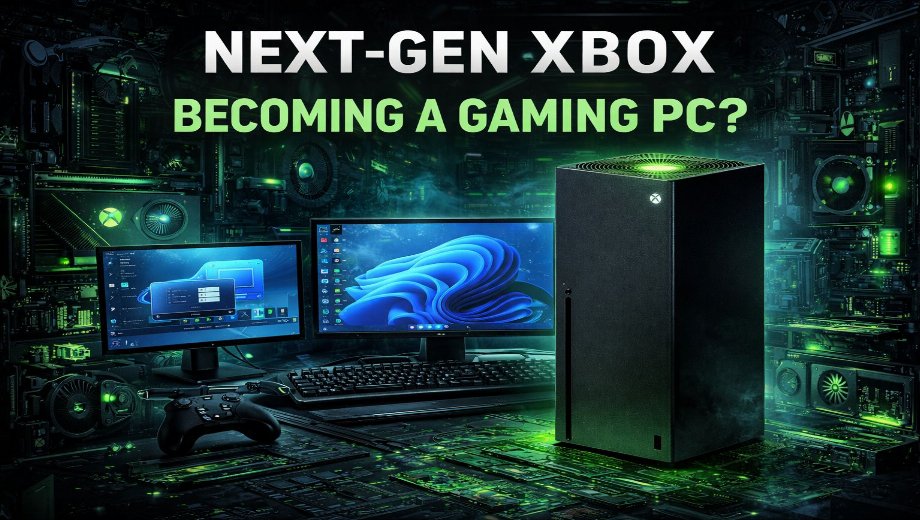
Microsoft appears to be rethinking what an Xbox console is meant to be, with new reporting suggesting the next-generation system may move closer to a PC-like design while retaining full console compatibility. The idea centers on flexibility, long-term backward support, and tighter integration with Windows and PC gaming ecosystems. While Microsoft has not formally revealed hardware details, comments from company leadership and recent reporting point toward a significant shift in strategy.
A More PC-Like Xbox Is Taking Shape
According to reporting from TheGamer, Microsoft is exploring a next-generation Xbox that behaves more like a gaming PC while remaining accessible as a console. The concept involves standardized hardware combined with a more open software environment, allowing developers to target Xbox and PC builds with fewer technical differences. This would extend Microsoft’s long-standing goal of unifying its gaming platforms.
Additional context from Windows Central supports this direction, noting that Microsoft has already aligned Xbox development tools closely with Windows. A PC-like Xbox could allow for faster iteration, easier porting, and potentially new input and display options while still preserving the simplicity expected from console hardware.
Backward Compatibility Remains Central to the Plan
Backward compatibility continues to be one of Microsoft’s strongest differentiators, and reports suggest it will remain a priority for the next Xbox. Speaking previously about platform strategy, Xbox leadership has emphasized preserving access to players’ existing libraries rather than resetting ecosystems with each generation. That philosophy aligns with maintaining compatibility across Xbox One, Series X|S, and older titles.
Analysis from The Verge highlights that Microsoft has invested heavily in emulation, licensing, and preservation efforts. A PC-like architecture could make this easier by standardizing hardware behavior across generations. For players, this would mean fewer disruptions when upgrading hardware.
Why Microsoft Is Pushing Toward a Hybrid Model
The shift toward a hybrid console-PC model reflects broader changes in how people play games. Microsoft has already expanded Xbox beyond dedicated hardware through Game Pass, cloud streaming, and PC storefront integration. A more flexible Xbox console would fit neatly into that ecosystem rather than standing apart from it.
Industry coverage from GamesIndustry.biz points to comments from Xbox head Phil Spencer about avoiding traditional generational resets. Instead of focusing solely on raw hardware leaps, Microsoft appears interested in continuity, accessibility, and platform longevity. A PC-like console supports that vision.
What This Could Mean for Developers and Players
For developers, a standardized and PC-adjacent Xbox platform could reduce development costs and simplify cross-platform releases. Shared toolchains and similar architectures would make it easier to support Xbox alongside PC without maintaining separate builds. That efficiency could be especially valuable for smaller studios.
For players, the benefits would likely include stronger backward compatibility, longer hardware relevance, and tighter integration with PC libraries and services. However, Microsoft has not confirmed pricing, performance targets, or how open the platform would become. Until official details arrive, the next Xbox remains a concept shaped by strategy rather than a finalized product.



![Wild West Supermarket Simulator v1.0.682a (+4 Trainer) [RazorDOX]](https://618b31e8.delivery.rocketcdn.me/wp-content/uploads/2026/10/Wild-West-Supermarket-Simulator-01-464x276.jpg)

![Eastern Era v1.0-v1.1.x+ (+63 Trainer) [FLiNG]](https://618b31e8.delivery.rocketcdn.me/wp-content/uploads/2026/06/Eastern-Era-01-464x276.jpg)