Crimson Desert’s Rocky Debut: Big Numbers, Bigger Problems
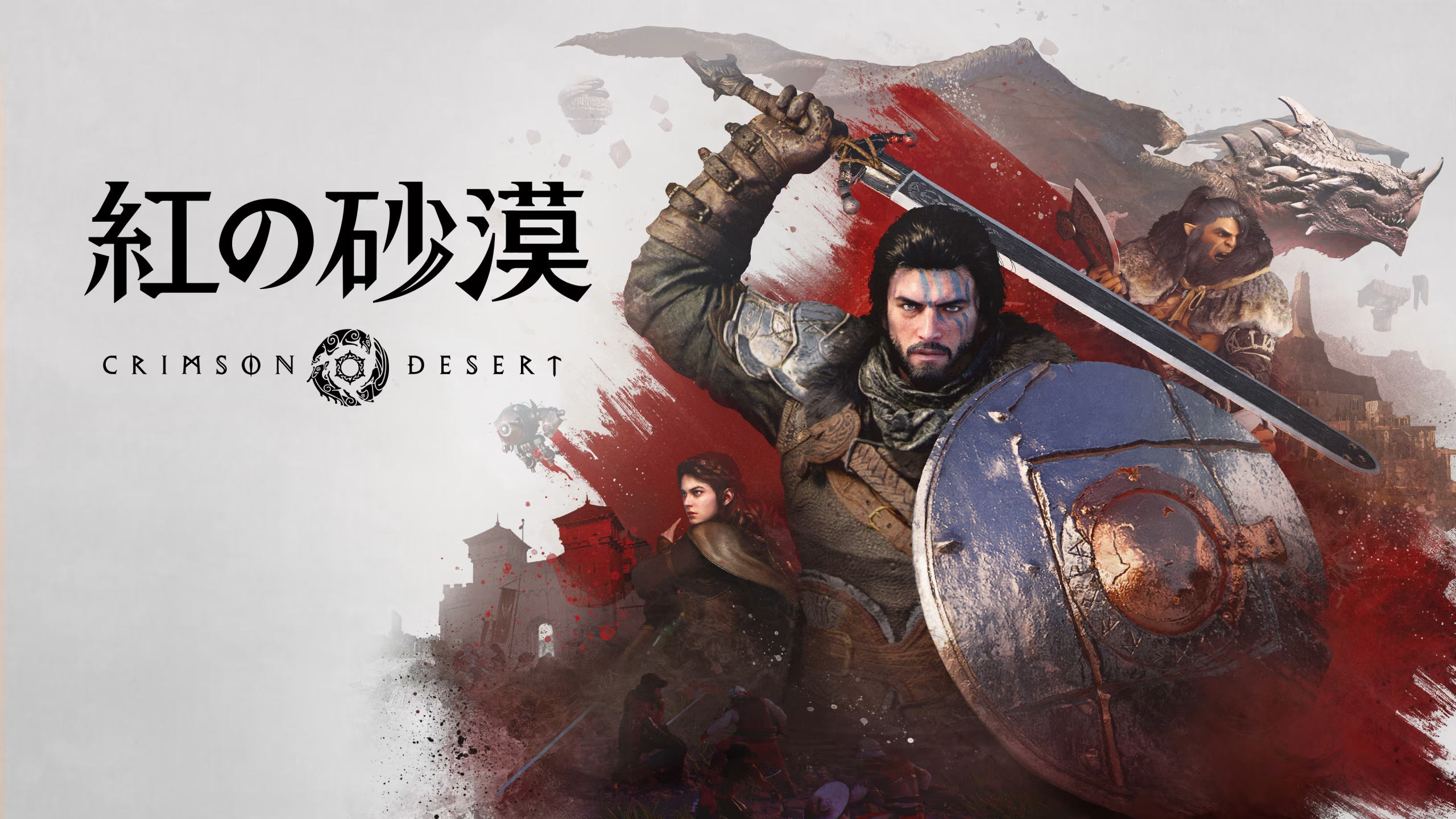
Crimson Desert didn’t arrive quietly. Years of hype, a massive open world, and high expectations set the stage. At launch, the numbers delivered. Hundreds of thousands of players jumped in within hours, with strong activity reflected on SteamDB. But the first wave of Crimson Desert News quickly shifted the narrative. User reviews on the official Steam page settled into “Mixed” territory, and criticism spread fast. The question now is simple. How many players are actually satisfied?
The most important points at a glance
- “Mixed” Steam rating (~57% positive) based on user reviews
- Peak player count exceeded 239,000 concurrent users
- Controls and UI are the main sources of frustration
- Open world praised for scale, visuals, and freedom
- Criticism targets lack of depth and weak storytelling
Strong First Impression, Rapid Friction
At first glance, Crimson Desert impresses. The world is vast and visually striking, filled with systems that unfold over time. Exploration feels rewarding, and there is a clear sense of ambition behind every mechanic. Early coverage highlights that appeal, with reports noting strong player interest despite early concerns, as seen in PC Gamer’s launch analysis.
That impression does not hold for everyone. The longer players stay, the more friction appears. Feedback across reviews repeats the same issues. The game feels heavier than expected. Movement lacks responsiveness, actions require awkward input combinations, and even simple interactions become harder than they should be.
Controls, UI, and the Weight of Design Decisions
The control scheme sits at the center of the criticism. Players consistently point to complex input combinations and limited flexibility. That frustration is amplified by sluggish movement and delayed reactions. Combat, which should carry the experience, often feels disconnected instead of fluid.
The user interface adds to the problem. Menus feel crowded, navigation lacks clarity, and the overall flow slows the pace. Broader coverage echoes the same sentiment, with reports describing the controls as “ridiculously bad” and the UI among the weakest elements, as highlighted by GamesRadar’s review breakdown.
Scale Without Substance?
Beyond mechanics, a deeper concern emerges. Crimson Desert offers scale in abundance, but many players question its depth. The world is filled with content, yet the story struggles to leave an impact. Characters lack presence, and the narrative rarely drives the experience forward.
Part of the disconnect comes from expectation. Many players expected a story-driven RPG. Instead, the game leans toward systems-focused design shaped by its MMO roots. This mismatch is frequently highlighted in early coverage, including your source analysis on GameStar.
A Divided Reception and an Uncertain Future
Reception is not uniform. Some players appreciate the complexity and ambition. Others see it as unnecessary friction. That divide defines the current state of the game.
There is room for improvement. Updates can refine controls, improve the interface, and stabilize performance. But the core design is harder to change. That leaves Crimson Desert in a difficult position.
It is not a failure. The foundation is too strong for that. But it is not a clean success either. Right now, it is a game caught between ambition and execution. Until that balance improves, Crimson Desert News will continue to reflect a debut that feels as rough as it is promising.


![Wild West Supermarket Simulator v1.0.682a (+4 Trainer) [RazorDOX]](https://618b31e8.delivery.rocketcdn.me/wp-content/uploads/2026/10/Wild-West-Supermarket-Simulator-01-464x276.jpg)

![Eastern Era v1.0-v1.1.x+ (+63 Trainer) [FLiNG]](https://618b31e8.delivery.rocketcdn.me/wp-content/uploads/2026/06/Eastern-Era-01-464x276.jpg)